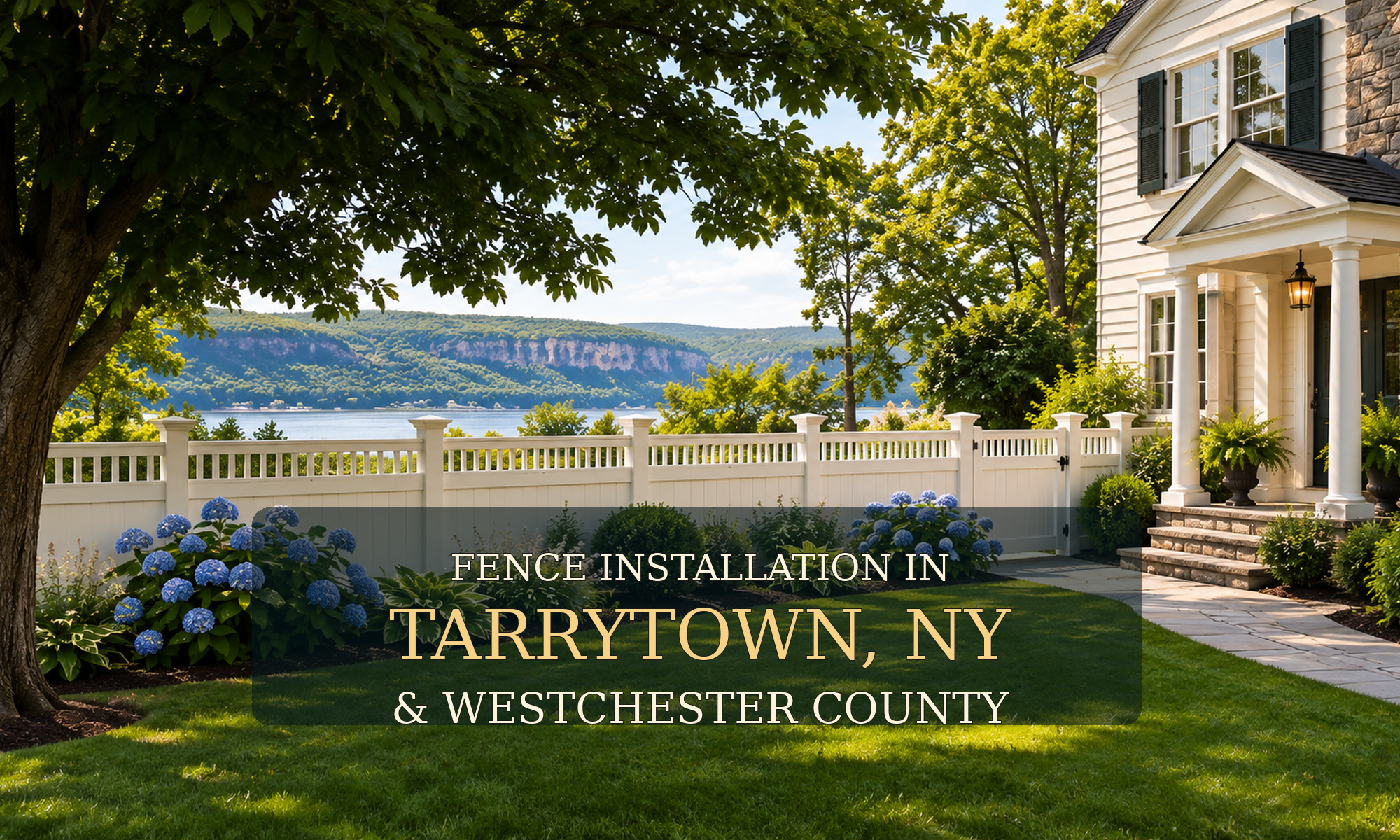

Thoughtful Fencing for Tarrytown’s Historic Homes, Beautiful Landscapes, and Distinctive Properties
About Tarrytown Fence Company is about more than the fences surrounding a property. It is about the relationship between a home, its architecture, its landscape, and the outdoor spaces that make everyday living more enjoyable.
At Tarrytown Fence Company, our focus is on helping homeowners and property owners explore fencing solutions that balance attractive design, privacy, practical functionality, and long-term value. Whether a property calls for a traditional wood picket fence, a private backyard enclosure, ornamental aluminum, or carefully coordinated gates, the right solution begins with understanding the setting.
Tarrytown, New York, has a character that deserves particular attention. Its historic neighborhoods, mature landscaping, distinctive residences, and Hudson River surroundings create an environment where fencing can influence both the appearance of an individual property and the character of the streetscape.
We believe a successful fence should complement those surroundings rather than compete with them.
Our approach is centered on informed decisions, appropriate materials, thoughtful design, and consideration of how each property is used.
Our Philosophy: Beautiful Fencing Begins with Understanding the Property
Every home has a personality.
Some properties are defined by traditional architectural details, covered porches, and landscaped front gardens. Others feature more contemporary design, outdoor entertaining areas, or expansive grounds with established trees and stonework.
These characteristics should influence the fencing selected for the property.
An ornamental fence may be an attractive choice for a formal garden where preserving views is important. A custom wood fence may be better suited to a traditional residence where natural materials complement the architecture. Solid privacy fencing may provide greater comfort around a patio or backyard.
The most appropriate option is not necessarily the most elaborate or expensive one.
We believe good fence planning considers several priorities together:
-
Architectural compatibility: Choosing fencing that complements the home’s design and proportions.
-
Landscape character: Working with existing gardens, trees, walkways, and stonework.
-
Privacy and security: Understanding where screening or a controlled enclosure is needed.
-
Material suitability: Comparing wood, vinyl, aluminum, and other fencing systems.
-
Practical access: Planning gates that make everyday use of the property convenient.
-
Long-term ownership: Considering maintenance, durability, appearance, and future repair needs.
A thoughtfully selected fence can improve a property without overwhelming the features that make it attractive.
An Appreciation for Tarrytown’s Historic Character
Tarrytown is distinguished by its architectural heritage and Hudson River setting.
The Village includes traditional residential neighborhoods, historic structures, tree-lined streets, and a walkable downtown that contributes significantly to its identity.
Its neighborhoods also reflect varied terrain and different periods of residential development.
These qualities influence how exterior improvements should be considered.
Traditional Homes and Established Streetscapes
Older residences may feature architectural details that deserve thoughtful coordination with new fencing.
A classic picket fence can create a welcoming boundary around a landscaped front yard. Ornamental metal fencing may complement masonry details or a more formal entrance.
Natural wood may also be appropriate where a homeowner wants a warm, traditional appearance.
The goal is to select a design that looks like it belongs with the home.
The Grove Street Area and Historic Residential Design
Tarrytown’s Grove Street Historic District is associated with nineteenth-century residences and distinctive architectural details.
Properties in historic settings can require particular care when considering fence height, style, materials, and visibility from the street.
A new fence should be evaluated in relation to the building’s historic character and any applicable preservation requirements.
We believe researching these considerations early is preferable to choosing a design that later requires substantial modification.
South Broadway and Landscaped Properties
Properties along and near South Broadway include settings where established landscaping, architectural features, and historic stonework contribute to the streetscape.
In these environments, fencing may need to complement garden walls, planting beds, walkways, and the scale of the residence.
Open decorative fencing may be suitable for certain locations, while privacy fencing may serve more secluded outdoor areas.
The design should respond to the individual property.
Fencing Inspired by the Hudson River Landscape
Tarrytown’s location along the Hudson River contributes to the community’s visual identity.
Some residential properties feature elevated terrain, wooded surroundings, landscaped gardens, or scenic outlooks.
These conditions present opportunities to create fencing that balances enclosure with openness.
Preserving Scenic Views
Where a property benefits from attractive views, a solid fence may not always be the preferred choice.
Ornamental aluminum and other open-picket designs can establish boundaries while preserving visibility through the fence.
The appropriate approach depends on the property’s setting, exposure, and the owner’s priorities.
Creating Privacy Where It Matters
Some homes benefit from screening around patios, decks, garden seating areas, and other private outdoor spaces.
Rather than enclosing every boundary with solid panels, homeowners may consider where privacy is genuinely needed.
Combining open fencing and strategically positioned privacy sections can sometimes create a more balanced landscape.
Planning Around Trees, Slopes, and Existing Stonework
Mature trees, changes in elevation, retaining walls, and drainage features can influence fence placement.
A proposed fence should be considered in relation to these existing conditions before installation begins.
For hillside properties, panel alignment, ground clearance, and gate operation can require additional attention.
For properties with existing masonry or retaining walls, the structural suitability of proposed attachments should be evaluated rather than assumed.
We believe thoughtful fence planning respects the existing landscape whenever practical.
Our Approach to Planning a Fence
The foundation of a successful fencing project is a clear understanding of what the property owner wants to accomplish.
A fence may be intended to create privacy, improve curb appeal, provide an enclosure for pets, define a garden, or replace a deteriorating boundary.
Each purpose leads to different decisions.
Understanding the Primary Goal
The first consideration is function.
A decorative front-yard fence should not necessarily be selected using the same criteria as a backyard privacy enclosure.
Similarly, fencing for a garden may differ from fencing intended to contain pets or manage access.
Identifying the primary goal helps narrow the available options.
Considering Architectural Appearance
A fence can become a prominent feature of a home’s exterior.
Its color, material, height, proportions, and decorative details should be evaluated in relation to the architecture.
For historic or traditional homes, understated design may be especially appropriate.
For contemporary properties, simple lines and coordinated finishes may create a more cohesive appearance.
Evaluating Property Conditions
Terrain, drainage, landscaping, retaining walls, driveways, and walkways can influence the proposed fence layout.
These considerations are particularly important when a property has irregular boundaries or significant elevation changes.
Comparing Materials
Different fencing materials offer different benefits.
Homeowners should understand how appearance, privacy, upkeep, cost, and intended use influence the selection.
The most appropriate material is the one that meets the property’s priorities—not simply the one that looks most appealing in a photograph.
Planning Gates and Access
Gates should be incorporated into the initial design.
Walkway entrances, side-yard access, garden passages, and wider openings for maintenance equipment can influence how conveniently the property functions.
Gate dimensions, hardware, clearance, and placement deserve careful consideration.
Our Perspective on Wood and Cedar Fencing
Wood fencing offers natural character and flexibility.
It can complement traditional Tarrytown residences, established gardens, and properties where natural materials contribute to the desired appearance.
Depending on the design, homeowners may consider decorative picket fencing, board-on-board privacy enclosures, horizontal boards, or coordinated garden gates.
Cedar is frequently considered for its attractive grain and natural resistance to decay.
Wood can also be painted or stained to complement exterior finishes.
However, homeowners should understand its maintenance requirements.
Sunlight, rainfall, seasonal temperature changes, and exposure to vegetation can affect wood over time.
Periodic cleaning, refinishing, and occasional component replacement may be necessary.
For those who value natural materials and customized appearance, wood remains an appealing option.
Our Perspective on Vinyl Fencing
Vinyl fencing can provide a clean, consistent appearance with relatively low routine surface maintenance.
It is commonly considered for backyard privacy, side-yard boundaries, and residential enclosures where homeowners prefer not to paint or stain their fencing regularly.
Solid privacy panels can create visual screening, while picket and semi-private designs offer different levels of openness.
The performance of a vinyl fence depends on more than its appearance.
Panel construction, post support, gate hardware, and installation methods are important considerations.
Although vinyl generally requires less routine finishing than wood, cleaning and periodic inspection remain appropriate.
We believe homeowners should compare products and configurations according to their property’s needs and maintenance preferences.
Ornamental Aluminum and Decorative Metal Fencing
For properties where architectural appearance and open views are important, ornamental fencing can be a compelling option.
Aluminum fencing provides a defined boundary without necessarily obstructing surrounding gardens, lawns, or scenic outlooks.
Its available designs include traditional decorative profiles and simpler contemporary arrangements.
This flexibility makes it worth considering for prominent entrances, formal gardens, walkways, and landscaped front yards.
Many finished aluminum products offer corrosion resistance and reduced routine maintenance compared with certain other materials.
However, finish quality, hardware, gate construction, and exposure conditions still matter.
Decorative fencing should complement the property while providing an appropriate level of enclosure.
Practical Fencing for Everyday Needs
Not every fencing project calls for elaborate architectural detailing.
Some spaces need a straightforward boundary that serves a practical purpose.
Pet areas, utility spaces, selected property boundaries, and certain commercial applications may benefit from chain-link or other functional fencing systems.
These options should still be evaluated for appearance, access, height, ground clearance, and maintenance.
On larger properties, it may be appropriate to use decorative fencing near prominent entrances and practical systems in less visible areas.
The goal is a balanced design in which each section serves its intended purpose.
Privacy and the Enjoyment of Outdoor Living
A home’s outdoor spaces often support many different activities.
A patio may be used for entertaining. A garden may provide a quiet retreat. A backyard may serve as a play area or gathering place for family and friends.
Fencing can influence how comfortable these spaces feel.
A well-positioned privacy fence can help reduce direct views from adjacent properties. A decorative fence can define an outdoor area without creating complete visual separation.
For some homes, combining different fencing styles may provide the most appropriate result.
We believe privacy should be planned around the way the space is used.
A thoughtfully considered enclosure can improve the outdoor experience while maintaining the property’s overall visual character.
Custom Gates and Attractive Entrances
Gates are important elements of fencing design.
They provide access, influence daily convenience, and may contribute significantly to the property’s appearance.
Walkway and Garden Gates
Pedestrian gates can connect front yards, gardens, driveways, and private outdoor areas.
Their placement should make movement through the property convenient.
Wider Access Openings
Some properties require larger gates for landscaping equipment or maintenance access.
Appropriate dimensions should be planned before the fence layout is finalized.
Decorative Entrance Gates
Wood and ornamental metal gates can complement traditional architecture, stone pillars, or landscaped approaches.
Their proportions, finishes, and hardware should coordinate with the surrounding fence.
Driveway Gates
Driveway entrances require consideration of grade, vehicle movement, opening clearances, and available space.
Automated systems also involve equipment and safety requirements that should be addressed during planning.
A gate should be attractive, functional, and appropriate for its intended use.
Residential and Commercial Fencing Considerations
Residential fencing often focuses on privacy, garden design, pet containment, curb appeal, and enjoyment of outdoor spaces.
Commercial properties may have different needs.
Certain locations may require practical perimeter boundaries, utility screening, controlled access, or attractive fencing around a public-facing entrance.
The materials and configuration should reflect the intended use.
Decorative fencing may be appropriate for a landscaped business entrance, while a functional enclosure may be better suited to a service or utility area.
We believe the same planning principles remain important: understand the property, identify the purpose, compare materials, and consider long-term functionality.
Serving Tarrytown and Westchester County
Tarrytown is the center of our local identity, and Tarrytown Fence Company serves property owners throughout Westchester County, New York.
Communities such as Sleepy Hollow, Irvington, Dobbs Ferry, Ardsley, Elmsford, Briarcliff Manor, and Pleasantville include diverse residential architecture, landscaping, terrain, and outdoor living requirements.
Properties in different communities may also be subject to different municipal regulations.
A traditional village residence may call for decorative fencing that complements an established streetscape.
A larger landscaped property may benefit from coordinated gates and multiple fence styles.
A more compact backyard may prioritize privacy and efficient use of outdoor space.
We believe the right fencing solution should reflect the individual property, regardless of its location within the county.
Understanding Tarrytown’s Architectural Review and Local Requirements
Tarrytown’s historic character makes municipal review an important consideration for certain fencing projects.
The Village’s Architectural Review Board evaluates specified exterior improvements, including certain fences.
Under the published provisions of Chapter 9, architectural review generally applies to fences in a front yard or within the required minimum front-yard setback when they are higher than 30 inches.
Other fences may also require review depending on their location, height, zoning district, historic designation, and applicable exceptions.
The Village has additional regulations governing fence height and placement.
Property owners should confirm whether a proposed installation requires architectural review, a building permit, zoning approval, or another municipal authorization before proceeding.
Official local resource: Review the Village of Tarrytown Architectural Review Board requirements, particularly the provisions concerning fence location and height.
Homeowners can also consult the Village of Tarrytown zoning regulations for information about requirements affecting their property.
Property boundaries deserve similar attention.
An existing fence, hedge, or garden wall does not necessarily identify a legal boundary between neighboring parcels.
Reviewing available survey information can help homeowners avoid preventable placement problems.
For historic properties, checking the applicable requirements before choosing materials or decorative details is especially important.
We believe responsible planning begins with understanding these considerations.
What We Believe Makes a Good Fence Project
Choosing a fence involves an investment in the property’s appearance and everyday usability.
We believe property owners should have a clear understanding of the decisions involved.
Clear Information
Homeowners should understand the available materials, design options, maintenance requirements, and factors affecting a proposed project.
Design Compatibility
The fence should complement the home and surrounding landscape.
A decorative feature is most successful when it feels appropriate for the property.
Practical Functionality
Privacy, enclosure, gate access, and everyday convenience should be considered alongside appearance.
Appropriate Material Selection
Wood, vinyl, aluminum, and other systems have different characteristics.
The right selection depends on the property’s needs rather than a single standardized recommendation.
Long-Term Thinking
Maintenance, durability, hardware, environmental exposure, and future usefulness all contribute to a fencing decision.
These principles reflect the property-focused approach we want associated with Tarrytown Fence Company.
Frequently Asked Questions About Tarrytown Fence Company
What is Tarrytown Fence Company’s approach to fencing?
Our approach emphasizes thoughtful design, appropriate materials, architectural compatibility, privacy, practical access, and long-term value. We believe the right fence should complement the property while serving its intended purpose.
Does Tarrytown Fence Company serve areas outside Tarrytown?
Yes. The company’s stated service area includes Tarrytown and communities throughout Westchester County, New York.
What types of fences are appropriate for traditional Tarrytown homes?
Traditional wood picket fencing, custom cedar designs, and selected ornamental metal styles may complement historic or traditional architecture. The appropriate design depends on the property and any applicable local requirements.
Why is architectural compatibility important?
Fences are often visible from streets, walkways, gardens, and neighboring properties. Their style, proportions, height, color, and materials can influence the appearance of the home and surrounding streetscape.
Are privacy fences suitable for Tarrytown properties?
Privacy fencing may be appropriate around backyards, patios, and other outdoor living spaces. The ideal design depends on the property layout, desired screening, and applicable municipal regulations.
Can different fence styles be combined on one property?
Yes. Some properties benefit from decorative fencing near prominent entrances and privacy fencing around more secluded outdoor areas. Coordinating materials and finishes can help maintain a cohesive appearance.
Does Tarrytown require Architectural Review Board approval for fences?
Certain fences require architectural review, depending on height, location, zoning, and other applicable conditions. The Village’s code specifically addresses front-yard fences higher than 30 inches and provides additional review requirements and exceptions.
What should homeowners consider before replacing a fence?
Review the existing fence’s condition, property boundaries, privacy needs, material options, gate placement, terrain, maintenance expectations, and any required municipal approvals.
What materials offer relatively low routine maintenance?
Vinyl and many finished aluminum fencing products generally require less routine surface finishing than traditional wood. Maintenance needs still vary according to product quality, hardware, environmental exposure, and use.
Learn More About Tarrytown Fence Company
About Tarrytown Fence Company is ultimately about our belief that the most successful fencing decisions begin with understanding the property.
A thoughtfully chosen fence can complement historic architecture, define a beautiful garden, create privacy around outdoor living spaces, and provide a more functional boundary for everyday use.
The right result is not determined by material or appearance alone.
It comes from considering design, property conditions, maintenance, access, and the features that make the setting distinctive.
At Tarrytown Fence Company, our focus is on helping homeowners and property owners explore fencing solutions appropriate for Tarrytown and the greater Westchester County area.
Whether you’re considering a traditional wood fence, decorative metal boundary, vinyl privacy enclosure, or coordinated gates, we welcome the opportunity to learn about your property and discuss its fencing needs.
Contact Tarrytown Fence Company today to discuss your project and request an estimate.
Thoughtfully designed fencing solutions for Tarrytown, New York, and communities throughout Westchester County.